Refrigerated Shipping Containers: A Complete Guide
Businesses that handle temperature-sensitive products need reliable storage solutions that can maintain controlled conditions. Refrigerated shipping containers, also known as reefer containers, provide a flexible option for storing and transporting products that require specific temperature settings.
Unlike standard shipping containers, refrigerated shipping containers are equipped with cooling systems designed to help maintain stable internal temperatures. They are widely used by industries such as food and beverage, agriculture, pharmaceuticals, and logistics for protecting sensitive products during storage and transportation.
Whether used for short-term storage, business operations, or specialized applications, refrigerated shipping containers offer a practical solution for managing temperature-sensitive goods.
What Are Refrigerated Shipping Containers?
Refrigerated shipping containers are insulated containers equipped with built-in refrigeration units that help regulate interior temperatures. These containers were originally designed for transporting products across long distances while maintaining specific environmental conditions. The insulated structure helps reduce temperature fluctuations, while the refrigeration system supports consistent cooling performance.
Common applications include:
- Food storage
- Beverage storage
- Agricultural products
- Pharmaceutical supplies
- Frozen goods
- Temperature-sensitive materials
Their portable design allows businesses to create controlled storage environments without requiring permanent cold storage facilities.
How Do Refrigerated Shipping Containers Work?
Refrigerated shipping containers use an integrated cooling system to maintain a controlled internal environment. The refrigeration unit removes heat from inside the container and helps maintain the required temperature level.
Key components include:
Insulated Walls
The insulated panels help reduce external temperature impact and support better temperature control.
Refrigeration Unit
The cooling system maintains the desired internal conditions based on the requirements of stored products.
Temperature Monitoring
Many refrigerated containers include monitoring features that allow users to check and manage temperature levels.
Power Connection
Refrigerated shipping containers require a reliable power source to operate the cooling system continuously.
Benefits of Refrigerated Shipping Containers
Temperature-Controlled Storage
The biggest advantage of refrigerated shipping containers is their ability to provide controlled storage conditions for products that require specific temperature ranges.
This makes them suitable for:
- Fresh produce
- Dairy products
- Frozen items
- Medical supplies
- Specialty products
- Flexible Storage Solution
Refrigerated containers can be placed at different locations based on business needs. They are useful for companies that require additional cold storage capacity without building a permanent facility.
Protects Product Quality
Maintaining proper temperatures helps businesses preserve the quality, freshness, and usability of temperature-sensitive products.
Suitable for Multiple Industries
From agriculture to food distribution, refrigerated shipping containers support many industries that depend on reliable temperature management.
Common Uses of Refrigerated Shipping Containers
Food and Beverage Industry
Restaurants, suppliers, and food distributors often use refrigerated containers for storing fresh and frozen products.
Applications include:
- Meat storage
- Seafood storage
- Dairy products
- Fruits and vegetables
- Frozen foods
- Agriculture and Farming
Farmers and agricultural businesses use refrigerated shipping containers to store harvested products before distribution. They help maintain product quality during peak harvest periods when additional storage capacity is needed.
Pharmaceutical Storage
Certain medical products require controlled temperatures to maintain effectiveness. Refrigerated containers provide additional storage options for temperature-sensitive supplies.
Event and Temporary Operations
Large events, catering operations, and temporary facilities may use refrigerated shipping containers for short-term cold storage requirements.
Features to Consider When Choosing a Refrigerated Shipping Container
Selecting the right refrigerated shipping container depends on your specific storage requirements. Important features to evaluate include:
Temperature Range
Different products require different temperature conditions. Choose a container that supports the temperature range needed for your application.
Container Size
Consider the amount of storage space required. Available space, product volume, and access needs should influence your selection.
Insulation Quality
Effective insulation helps maintain stable internal temperatures and improves overall performance.
Cooling System Condition
The refrigeration unit should be inspected to ensure it operates properly and meets your storage requirements.
Interior Configuration
Consider whether you need shelving, partitions, or other interior modifications for better organization.
Why Choose Refrigerated Shipping Containers
Businesses choose refrigerated shipping containers because they provide a combination of flexibility, mobility, and temperature-controlled storage capability. They are especially useful for organizations that need additional cold storage capacity during:
- Seasonal demand increases
- Business expansion
- Temporary projects
- Supply chain changes
- Facility upgrades
Instead of investing in permanent cold storage construction, businesses can use refrigerated containers as adaptable storage solutions.
Frequently Asked Questions
What are refrigerated shipping containers used for?
Refrigerated shipping containers are used for storing and transporting temperature-sensitive products such as food, beverages, agricultural goods, pharmaceuticals, and frozen items.
How do refrigerated shipping containers maintain temperature?
Refrigerated shipping containers use insulated walls and built-in refrigeration units to regulate internal temperatures and maintain controlled storage conditions.
Can refrigerated shipping containers be used for long-term storage?
Yes, refrigerated shipping containers can be used for both temporary and long-term temperature-controlled storage depending on business requirements and maintenance practices.
What industries use refrigerated shipping containers?
Industries such as food processing, agriculture, restaurants, pharmaceuticals, logistics, and catering commonly use refrigerated shipping containers.
Do refrigerated shipping containers require electricity?
Yes, refrigerated shipping containers require a reliable power source to operate the refrigeration system and maintain temperature control.
How should a refrigerated shipping container be maintained?
Regular maintenance includes inspecting the cooling system, checking door seals, cleaning the interior, monitoring temperatures, and ensuring proper electrical operation.
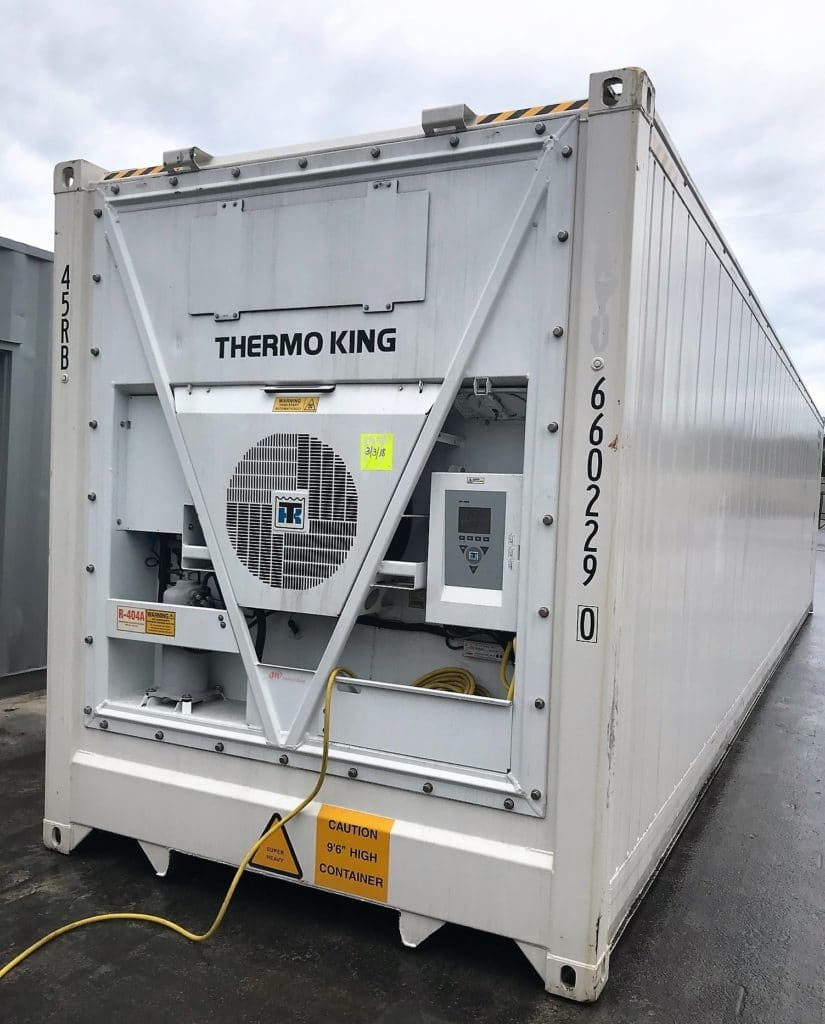
20 Foot Refrigerated (Reefer) Container
The 20-foot refrigerated container is a portable, temperature-controlled unit ideal for shipping and storing perishable goods. It provides reliable cooling to maintain the integrity of food, pharmaceuticals, and other sensitive items, ensuring consistent temperatures throughout transportation and storage.
Dimensions:
20’ x 8’ x 8’
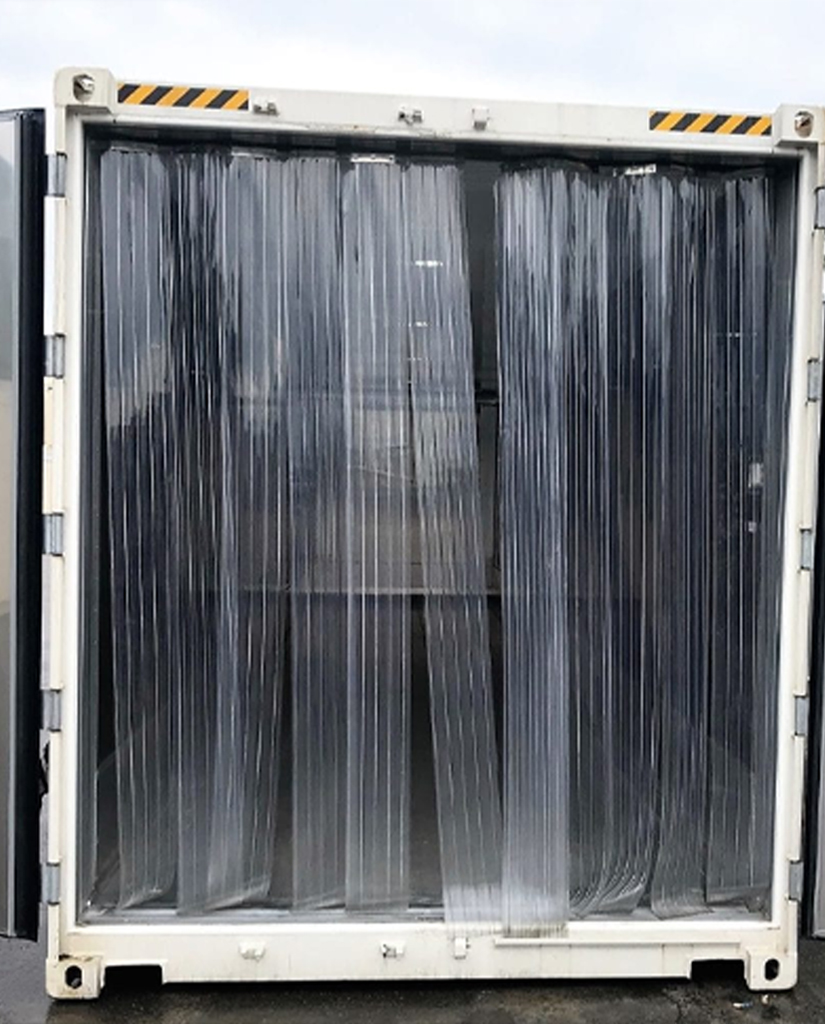
40 Foot Refrigerated (Reefer) Container
The 40-foot refrigerated container is a spacious, temperature-controlled unit designed for large-scale shipping and storage of perishable goods. It provides reliable cooling, ensuring the safe transportation and storage of food, pharmaceuticals, and other sensitive items, maintaining consistent temperatures across its ample interior.
Dimensions:
Typically 40′ x 8′
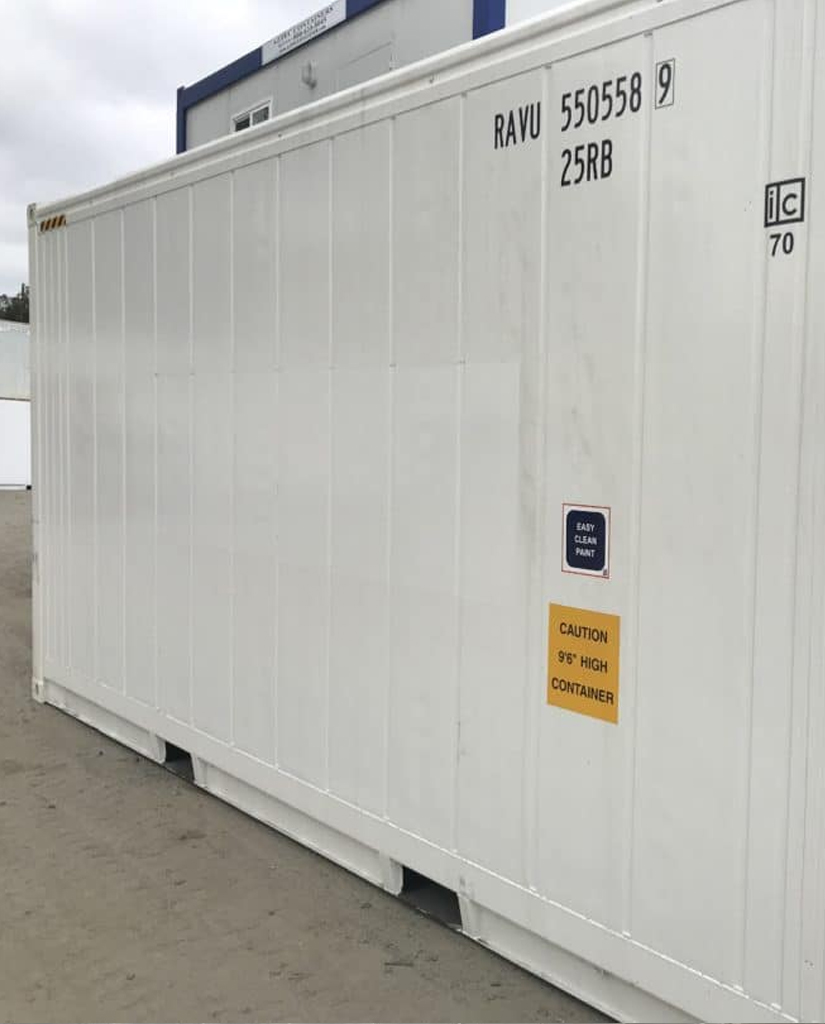
20 Foot Insulated Container
The 20-foot insulated container is a portable unit designed for moderate temperature control, ideal for storing and transporting goods that require insulation without active cooling. It features insulated walls that reduce temperature fluctuations, making it suitable for various products, including certain foods, pharmaceuticals, and electronics.
Dimensions:
20′ x 8′ x 8.6′
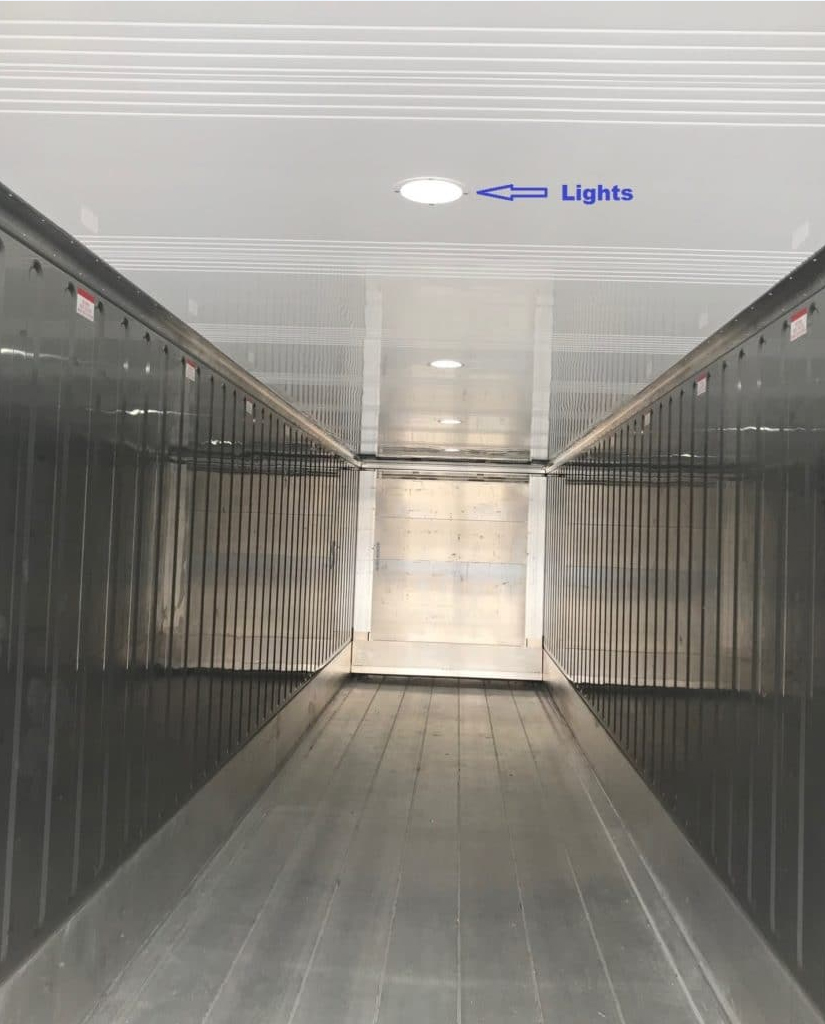
40 Foot Insulated Container
The 40-foot insulated container is a spacious unit providing consistent internal temperatures for goods requiring insulation without active cooling mechanisms. Its insulated walls reduce temperature fluctuations, making it an ideal choice for large-scale storage and transportation of moderately temperature-sensitive items, including food, pharmaceuticals, and electronics.
Dimensions:
8‘ x 40′ long x 9’6